Choose the lowest thermal conductivity that keeps your hottest component safely below its temperature limit, then confirm it with a test. A higher W/m·K costs more and makes the material thicker and heavier. It pays off most when heat has to pass through a thick layer, such as potting. For thin layers like thermal grease, a thin, even layer matters as much as the number.
What W/m·K means
Thermal conductivity, written as k or TC, tells you how easily heat passes through a material. It is measured in watts per metre per kelvin (W/m·K). The higher the number, the more easily heat flows.
| Material | Thermal conductivity |
|---|---|
| Still air | about 0.026 W/m·K |
| Ordinary (unfilled) silicone rubber | about 0.2 W/m·K |
| AceAdhesive thermally conductive grades | 0.4 to 3.0 W/m·K |
| Aluminium heat sink | about 200 W/m·K |
Air is a very poor conductor of heat. Even a 1 W/m·K material conducts heat about 40 times better than the air it replaces, which is why any gap between a hot part and a heat sink should never be left dry.
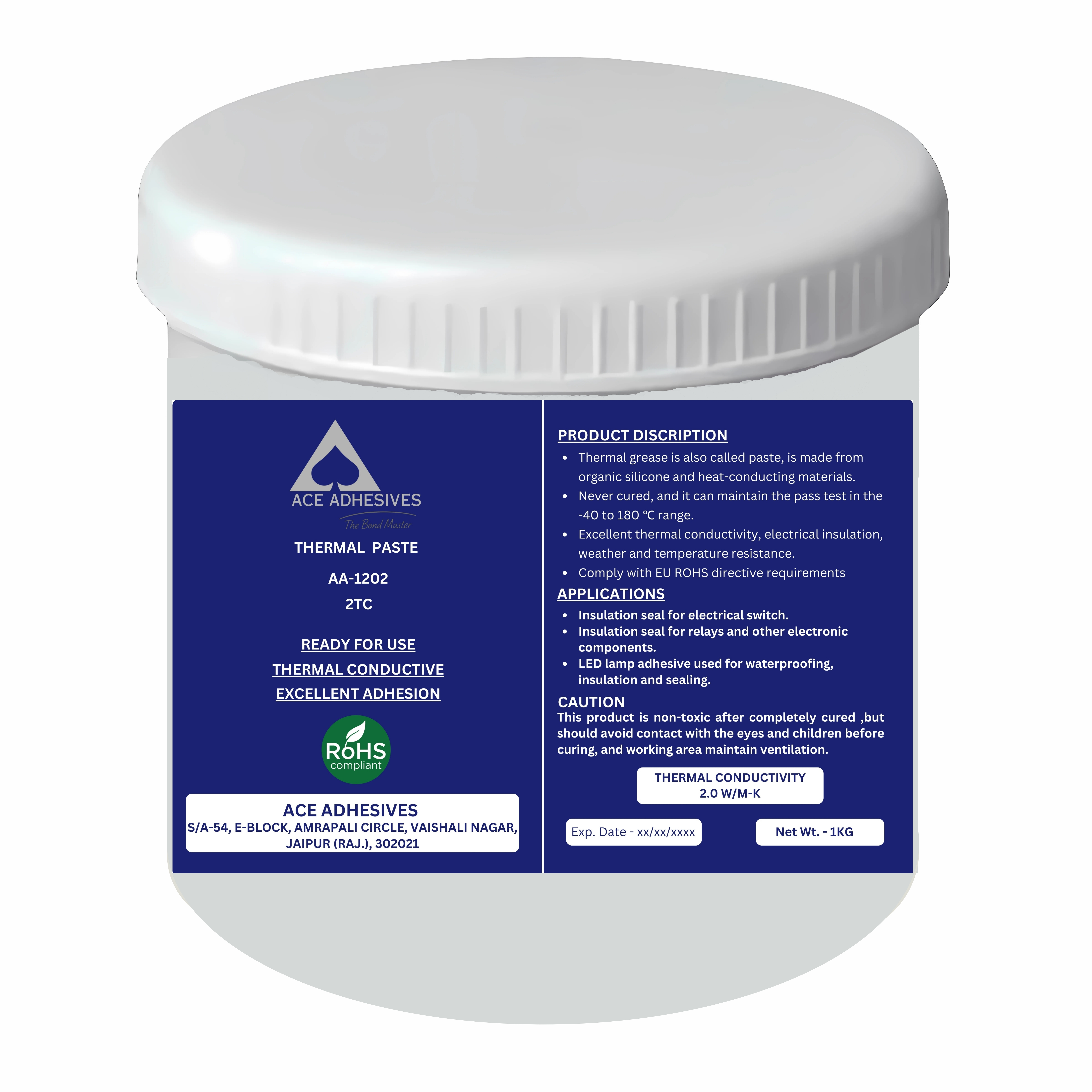
Some data sheets also list thermal resistivity in m·K/W. This is simply 1 divided by the conductivity. For example, our AA-1202 grease has a thermal resistivity of 0.5 m·K/W, which is the same as 2.0 W/m·K.
Thickness matters as much as the number
The temperature rise across a layer depends on its thickness, not only on its W/m·K:
Thermal resistance R = thickness ÷ (k × area)
Temperature rise = heat (W) × R
Here is an example: a 20 W power component on a 20 × 20 mm contact area.
| Interface layer | Thickness | Temperature rise |
|---|---|---|
| 1.0 W/m·K grease, applied thin | 0.05 mm | 2.5 °C |
| 3.0 W/m·K grease, applied thin | 0.05 mm | 0.8 °C |
| 3.0 W/m·K grease, applied too thick | 0.20 mm | 3.3 °C |
| Air gap (nothing applied) | 0.05 mm | about 96 °C |
The 3.0 W/m·K grease applied four times too thick runs hotter than the 1.0 W/m·K grease applied correctly. These figures leave out the contact resistance at the two surfaces, which adds to the total in a real assembly, but the lesson holds:
- Thermal grease works in very thin layers. A thin, even layer, flat surfaces and firm clamping matter as much as the W/m·K.
- Potting compound fills layers several millimetres thick. Heat crossing 5 mm of potting meets 100 times the resistance of a 0.05 mm layer of the same material, so the W/m·K makes a much bigger difference here.
Where to start: grade by application
These are typical starting points. Your heat load, enclosure and ambient temperature decide the final choice.
Swipe sideways to see the whole table →
| Product | Thermal conductivity | Typical use |
|---|---|---|
| Thermal Grease | 1.0 W/m·K (AA-1201) | General electronics and low-power LEDs |
| 1.6 to 2.0 W/m·K (AA-1216, AA-1202) | LED modules, SMPS and inverters | |
| 3.0 W/m·K (AA-1203) | IGBTs, power modules and other high heat loads | |
| Silicone Potting Compound | 0.87 to 1.0 W/m·K (AA-2887 PA, AA-2801 PA) | LED drivers, adapters and power supplies with moderate heat |
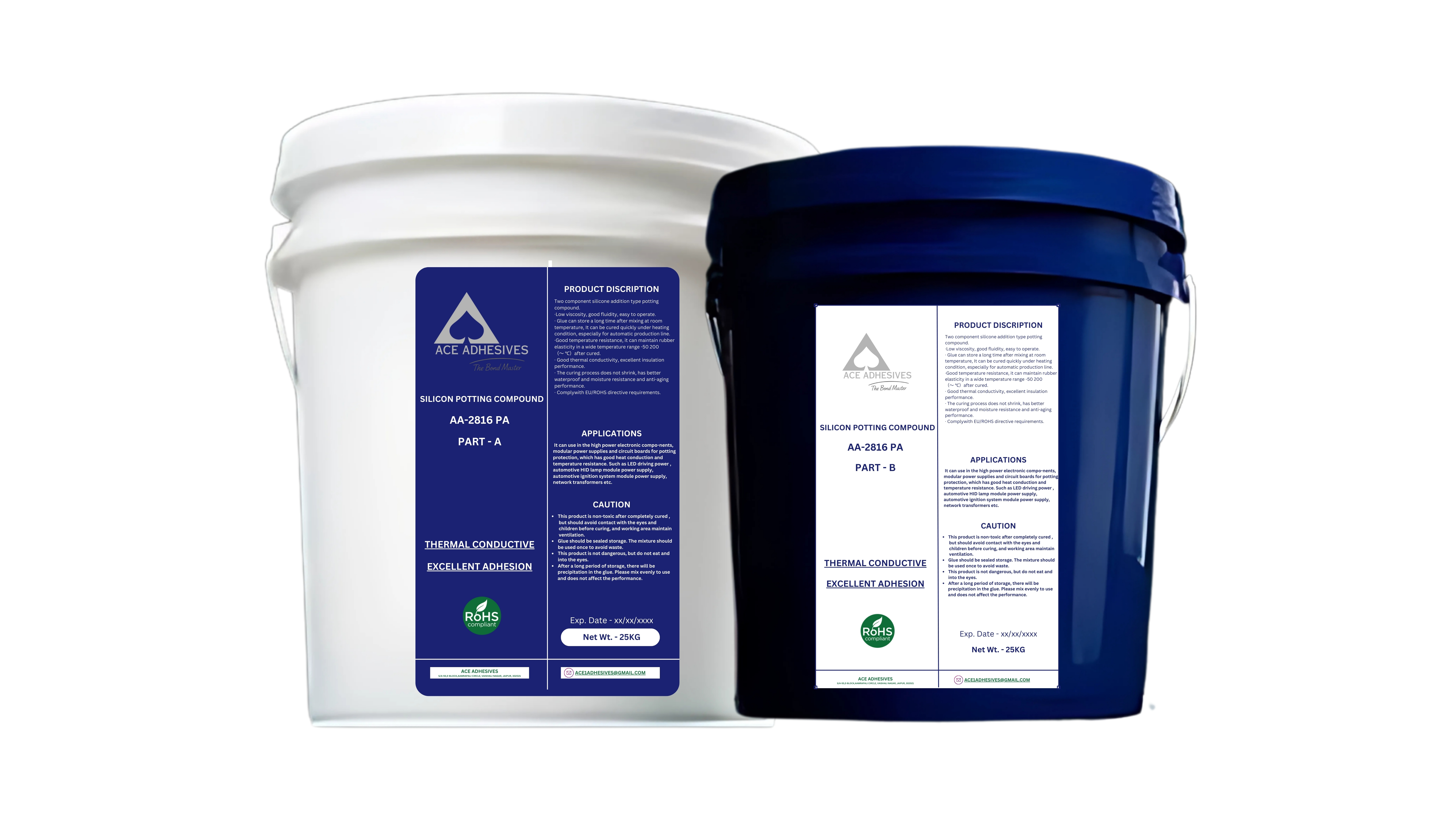
| 1.6 W/m·K (AA-2816 PA) | Higher-power drivers, power supplies and transformers | |
| 3.0 W/m·K (AA-2803 PA) | Compact high-power modules where heat must reach the housing fast | |
| Electronic RTV Silicone | 0.4 to 0.45 W/m·K (AA-5188 clear, AA-5145) | Sealing and insulation where little heat flows |
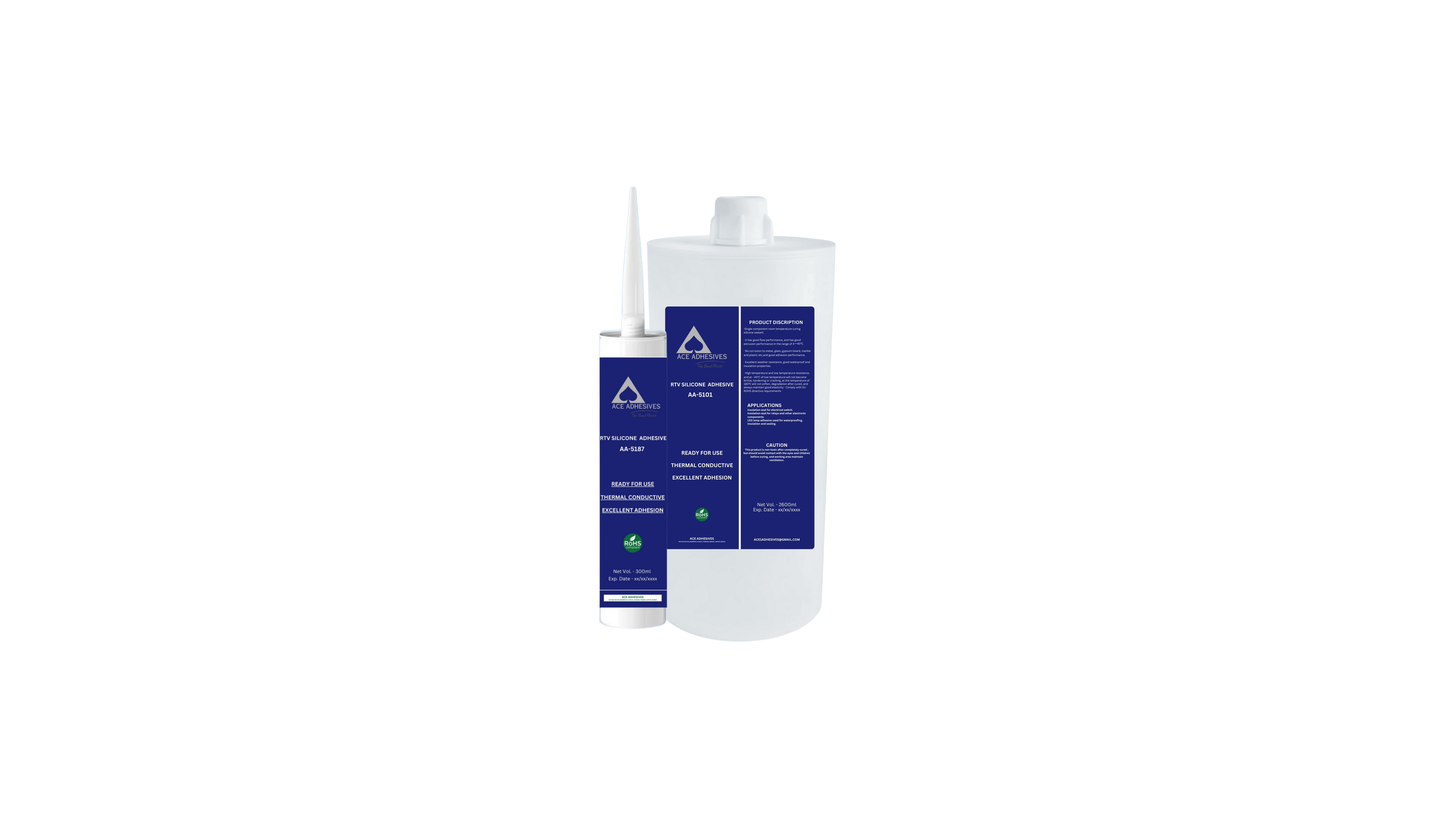
| 0.87 to 1.0 W/m·K (AA-5187, AA-5101) | Sealing that also needs to carry some heat | |
| 2.5 W/m·K (AA-5125) | Bonding LEDs, drivers and power parts to heat sinks |
What you give up with a higher W/m·K
More thermal conductivity means more heat-conducting filler. You can see the effect in our own potting data sheets:
- Thicker material. The 0.87 to 1.6 W/m·K potting grades have a mixed viscosity of about 6,500 to 7,200 mPa·s. The 3.0 W/m·K grade is 14,000 to 20,000 mPa·s. It flows more slowly into tight gaps and is harder to de-air.
- Heavier material. The 1.6 W/m·K grade weighs 2.5 g/ml and the 3.0 W/m·K grade weighs 2.95 g/ml. You buy by the kilogram but fill by volume, so the same cavity needs about 18% more material.
- Higher cost per kilogram.
- More wear on dispensing equipment, because heavily filled materials are abrasive.
So do not pay for W/m·K you do not need. Choose the grade your design requires, with a sensible margin.
A simple 4-step method
- Know the heat and the limit. Find how many watts the hottest part gives off and its maximum allowed temperature from its data sheet.
- Know the layer. Is it a thin interface between a part and a heat sink (grease or RTV), or a thick fill around the whole board (potting)?
- Start with the grade in the table above. If your calculation or first test runs close to the limit, step up one grade.
- Test a prototype. Run it at full load in its real enclosure and at the highest ambient temperature it will see. Measure the hottest part with a thermocouple. Testing two grades side by side quickly shows whether the higher grade is worth it.
Common questions
Is a higher W/m·K always better?
No. It only helps if heat flow through that layer is your bottleneck. A badly applied high-W/m·K grease can perform worse than a correctly applied lower grade, and a higher potting grade adds weight, cost and viscosity.
Can I use thermal grease instead of potting compound?
No. Thermal grease never cures. It is made for thin layers between a component and a heat sink. Potting compound cures into a solid rubber that also seals the board against water, dust and vibration.
What does "TC" mean on AceAdhesive data sheets?
TC is short for thermal conductivity, given in W/m·K. For example, AA-2816 PA is a 1.6 TC potting compound, which means it has a thermal conductivity of 1.6 W/m·K.